Telematics has spent years telling fleet managers what happened. The next step is helping them deal with what is happening now.
Construction software has traditionally been very good at reporting backwards. Utilisation, fuel use, machine hours, and incidents could all be reviewed, but often only after the delay, wasted time, or safety issue had already happened. As telematics platforms become more closely connected with machine safety and control systems, that information is becoming much more immediate.
Fleet managers are now getting a clearer picture of what is happening across their machines while they are still working. A problem can be picked up sooner, a machine can be moved where it is needed, and a safety event can be seen without waiting for somebody to produce a report at the end of the week.
For an industry where plans can change by the hour, that makes the data far more useful. It moves telematics away from something you look at afterwards and toward something that can support decisions while the job is still live.
Safety technology is a good example. Rather than waiting for an event to be discovered in a later report, systems such as Xwatch can intervene at machine level as a preset height, slew or lifting limit is approached. XW-Insite then makes those settings, stop activations and other safety information visible remotely.
Bring that together with the telematics technology developed with PVS Data and decision-makers gain a continuously updated view of safety and machine performance across a mixed fleet, rather than trying to reconcile separate systems and reports.
From hindsight to foresight
That changes the value of the data. Instead of confirming what went wrong, connected information helps teams act before a problem becomes a delay, cost, or incident.
Plant allocation can be adjusted as utilisation changes. Site teams can see whether machinery is operating, idling or unavailable.
Safety managers can identify recurring events on individual machines or across a fleet. Procurement and operational decisions can therefore be based on what is happening now rather than what happened last week.
Xwatch and PVS Data bring that principle together through XW-Insite. Height, slew and rated capacity indicator settings, weight-on-hook information, creep control and stop activations can sit alongside engine performance, fuel, CO₂, location and utilisation data. A safety event recorded by Xwatch and a productivity trend identified through PVS Data can therefore form part of the same operational picture rather than two separate datasets somebody has to reconcile by hand.
This matters because construction rarely runs neatly to plan. Machinery comes and goes as projects move through different phases. Operators and labour arrive through agencies, permanent teams and temporary cover. Deliveries move, programmes change and supply-chain problems create knock-on effects elsewhere.
Making decisions on the fly, and occasionally making a U-turn, remains part of everyday site management.
Live information about machinery, availability, utilisation and safety events is therefore becoming less of a reporting tool and more of an operational one. XW-Insite, for example, is designed so fleet managers can reach the information they need across a fleet in three clicks.
The benefit is not that software magically removes uncertainty. It gives decision-makers a clearer picture sooner. That can support better forecasting, more accurate capacity planning and improved productivity while giving safety teams greater visibility of how machines are being operated.
Where AI actually helps
AI adds another layer, although it is important to distinguish between connected data and genuinely AI-driven technology.
XW-Insite primarily brings live machine and safety information together in a usable form. Elsewhere in the Xwatch technology ecosystem, however, AI is already moving beyond analysis and into machine intervention.
Xwatch’s work with utility-detection specialist RodRadar is a good example. RodRadar’s AI-driven Live Dig Radar detects buried utilities during excavation. Integrated with Xwatch’s safety-grade hydraulic control, the system is designed to stop the excavator bucket when it detects a buried service.
That is a significant change in what construction technology can do. The conventional model was to collect information, analyse what happened and use the findings to reduce the chances of it happening again. Here, sensor data, AI and machine control work together while the task is taking place.
Human judgement remains central, but the technology can identify what the operator may not see and intervene before contact occurs.
The next three to five years
The direction of travel is towards fewer standalone systems and more connected operational intelligence.
Project teams are likely to spend less time interpreting raw data and more time acting on recommended information. Safety, productivity, carbon and cost will increasingly sit within the same operational view, while information flows more consistently between machines, sites and fleet management systems.
For operators, the technology also needs to become less intrusive. Another screen, another login and another alarm are not necessarily improvements.
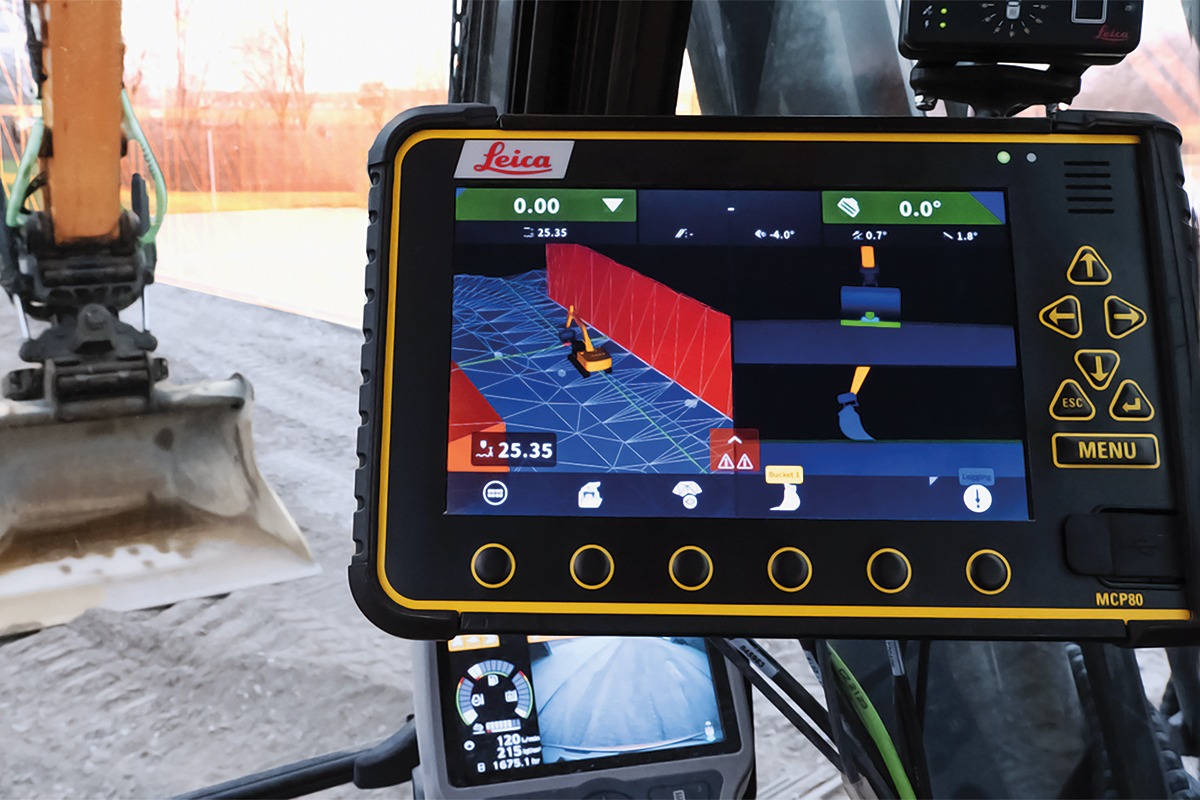
Xwatch’s integration with Leica’s MC1 machine control software points towards a different approach. The integration brings XW5 safety control into the Leica MC1 environment, allowing height, slew, and depth avoidance zones to be created, imported, and managed through the existing in-cab display.
Virtual boundaries can be created around hazards including overhead powerlines, site limits and buried services, with the machine progressively slowed and stopped as it approaches the defined zone. As Xwatch’s Dan Leaney described it when the integration was launched, it is “the missing link between safety and machine control”.
That may preview what comes next: fewer standalone boxes in the cab and more safety intelligence built into the systems operators already use. One of the less glamorous benefits of connected construction software is consistency. Embedding safety rules, machine information and common workflows into technology reduces reliance on individual interpretation and makes it easier to maintain standards across different sites, shifts and operators.
That matters in an industry facing skills shortages, tighter margins, and increasingly complex projects.
Ultimately, the goal should not be to give construction another dashboard. It should turn the enormous amount of information machines already generate into something useful while there is still time to act on it.
The real step forward is not knowing more about what happened yesterday. It is knowing enough about what is happening now to change what happens next.